


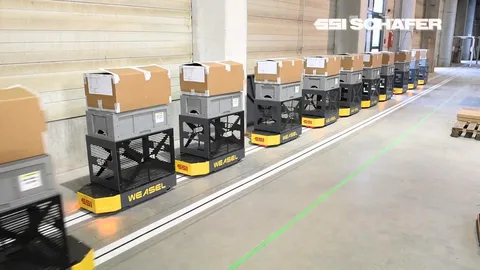
Industrial automation is evolving rapidly, and one of the smartest investments companies can make today is implementing an AGV solution. AGVs, or Automated Guided Vehicles, are transforming how businesses handle materials by replacing manual labor with intelligent, driverless systems. These self-operating vehicles improve efficiency, reduce errors, and enhance workplace safety. Whether you’re managing a warehouse, factory floor, or distribution center, AGVs streamline internal transport, enabling you to meet growing demands with precision and speed. For businesses seeking a scalable, modern automation system, MRDVS offers industry-leading AGV material handling solutions designed to deliver lasting performance and ROI.
This article will explore what AGV systems are, how they work, the types of AGVs available, and how industries are using them to revolutionize logistics and operations. You’ll also learn about the core technologies powering AGV systems, best practices for implementation, and key trends shaping their future.
What Is an AGV Solution?
An AGV solution refers to an automated transport system that uses guided vehicles to move goods, materials, or tools without human drivers. These intelligent machines are programmed to follow set paths or adapt dynamically using sensors, maps, and control software. Unlike forklifts or conveyor belts, AGVs require minimal human oversight, operate continuously, and integrate easily with digital warehouse management systems.
AGVs are used in:
- Manufacturing plants for moving raw materials or finished parts
- Warehouses for pallet and bin transport
- Healthcare facilities for delivering medical supplies
- Airports for baggage handling
By automating these functions, AGV systems minimize delays, reduce operational costs, and optimize facility throughput.
Key Components of AGV Systems
AGV systems are a blend of mechanical engineering, software, and smart technology. Their core components include:
- Navigation System
Guides the AGV using magnetic tape, lasers, vision-based tracking, or SLAM (Simultaneous Localization and Mapping). - Central Control Software
Coordinates AGV tasks, assigns routes, and communicates with other systems like ERP and WMS. - Onboard Sensors
Enable collision detection, obstacle avoidance, and safety compliance. - Battery System
Powers the vehicle, with automated charging options for 24/7 operations.
These systems work together to ensure safe, accurate, and reliable movement of materials in any environment.
Types of AGV Solutions and Their Applications
AGVs come in different forms to serve specific business needs. Here’s a quick overview:
| AGV Type | Description | Common Use Case |
| Tugger AGV | Pulls carts or trailers | Moving bulk items across factory floors |
| Unit Load AGV | Carries pallets or single loads | Transferring goods between workstations |
| Forklift AGV | Mimics traditional forklifts | Pallet loading/unloading in warehouses |
| Cart AGV | Compact vehicles for small-item movement | Hospital deliveries or assembly line support |
| Hybrid AGV/AMR | Combines AGV precision with AMR flexibility | Complex, variable-path material handling |
Selecting the right AGV type depends on your specific operational needs, load requirements, and facility layout.
Top Benefits of Adopting an AGV Solution
- Reduced Labor Dependency
Automating repetitive tasks reduces the need for manual labor, which helps companies address labor shortages and reassign staff to more strategic roles. - Enhanced Workplace Safety
AGVs use onboard sensors to avoid obstacles, reducing the risk of accidents and injury—especially in environments with pedestrian traffic. - Consistent Operational Efficiency
Unlike human workers, AGVs don’t get tired. They perform tasks with consistent timing and accuracy, leading to better throughput and fewer delays. - Real-Time Tracking and Data Collection
AGVs collect and report data on movement, delivery time, and system health—valuable insights for optimizing processes and maintenance. - Scalable and Flexible Deployment
You can start small with just a few AGVs and expand as your operation grows. The system can evolve with your business needs.
Industry Use Cases for AGV Systems
Automotive Manufacturing
AGVs move heavy parts, chassis, and engines between assembly points with precision. They support just-in-time manufacturing models by ensuring parts are always delivered when needed.
Warehousing and E-Commerce
From order picking to carton transport, AGVs improve accuracy and speed in logistics centers. They’re especially useful in high-throughput environments handling a variety of SKUs.
Food and Beverage
AGVs ensure hygienic and consistent transport of packaged goods, raw materials, and pallets, with minimal risk of contamination.
Pharmaceuticals
Precision and traceability are critical in pharma. AGVs help ensure materials are handled securely and can be tracked throughout the facility.
AGV Navigation Technologies
The success of an AGV solution largely depends on how it navigates its environment. Let’s break down the most common technologies:
- Magnetic Tape/Guidance Wire: Simple, cost-effective, but inflexible.
- Laser Guidance: Uses reflectors and sensors for high accuracy.
- Vision-Based Systems: Uses cameras to interpret the environment and follow dynamic routes.
- Natural Feature Navigation (SLAM): No physical infrastructure required; maps surroundings in real-time.
Each method has its advantages, and the choice depends on your facility’s complexity, required precision, and need for flexibility.
Best Practices for AGV System Implementation
- Evaluate Your Current Processes
Identify pain points and material flow inefficiencies that AGVs can address. - Select the Right Type of AGV
Match AGV types to your load sizes, transport routes, and space constraints. - Plan Navigation and Charging
Design clear paths and set up battery charging stations for continuous operation. - Integrate With Existing Systems
Ensure your AGV solution communicates with WMS, MES, and ERP platforms. - Train Staff and Set SOPs
Even though AGVs automate tasks, staff must be trained to monitor systems and respond to alerts or emergencies.
Common Challenges and Solutions
| Challenge | Solution |
| High Initial Investment | Focus on long-term ROI and reduced labor costs |
| Facility Adaptation Needed | Use flexible navigation like SLAM to reduce infrastructure changes |
| Change Management | Educate staff on benefits and provide role-redefinition opportunities |
| Complex Integration | Choose vendors with open API support and integration experience |
Future Trends in AGV Solutions
- AI-Powered Routing
Machine learning algorithms will enable AGVs to make better real-time decisions for path optimization and traffic management. - Fleet Intelligence
Centralized software will manage multiple AGVs, adjusting routes based on live data and resource availability. - AGV-AMR Hybrids
Future systems will blend the best of fixed-path AGVs with the autonomous flexibility of AMRs, creating adaptable indoor transport fleets. - Energy Efficiency and Sustainability
Next-gen AGVs will feature more efficient motors, energy recycling systems, and smarter charging methods to reduce carbon footprint.
Conclusion
As automation becomes a core strategy for competitiveness, the AGV solution stands out as a critical enabler for businesses aiming to optimize their material handling processes. With benefits like labor savings, higher efficiency, improved safety, and data-driven performance, AGVs are no longer optional—they’re essential.
From warehouses and factories to healthcare and retail, industries around the world are embracing AGVs as part of their digital transformation strategy. If you’re ready to take that step, choosing the right provider and planning your deployment carefully will ensure long-term success.
